
Why Plato’s Wisdom Is the Leadership Blueprint We Need Now
“He who does not desire power is fit to hold it.” – Plato
The phrase is over two thousand years old, yet it has never been more urgent.
Look around the world of politics, business, and technology today. The men and women scrambling for the stage lights, the ones clamouring for cameras and titles, the ones who want the throne most desperately, are so often the least fit to sit on it.
Why? Because power in itself corrupts nothing. But the thirst for it, the unrelenting hunger to possess and wield it, exposes weakness, fear, and ego.
And yet, here we are. We find ourselves led by those who chase power as an end in itself, while those best suited to lead are either silenced, sidelined, or have long since walked away.
Plato saw it. Dale Carnegie saw it. Napoleon Hill saw it. And if we have the courage to see clearly, we’ll admit it: the crisis of our time is not technology, nor politics, nor economy, it is leadership itself.
We want leaders we can trust. Leaders we respect. Leaders who can navigate complexity without losing their humanity. Leaders who put accountability before ambition.
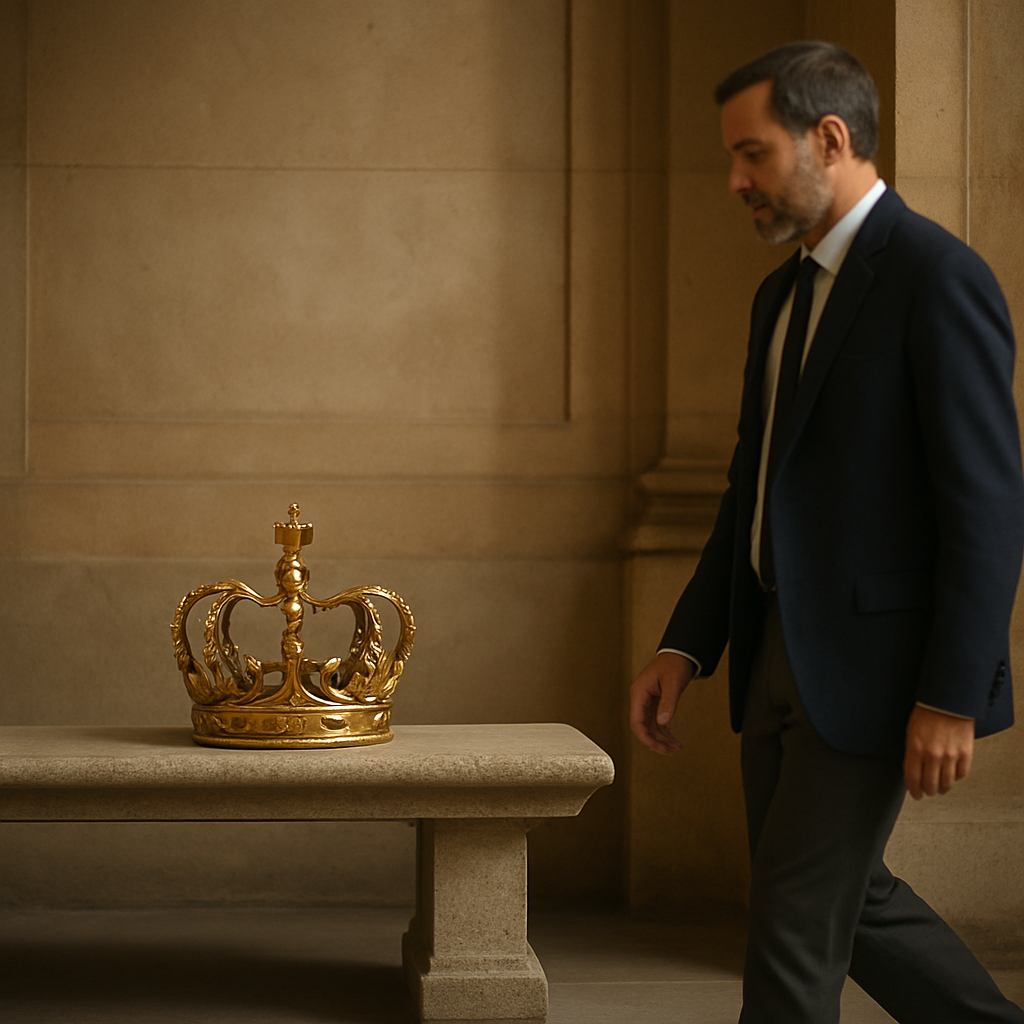
And until we stop rewarding the power-hungry and start elevating the reluctant leaders, the ones who never asked for the crown, we will keep spinning in this same cycle of disappointment.
The Timeless Truth About Power
Plato understood that leadership is not a prize, but a burden.
In his Republic, he argued that philosophers, precisely because they don’t crave wealth or power, are the ones who should govern. The paradox is stark: the less you want it, the better you are at it.
Why? Because when you don’t need the crown to feel whole, you can wear it lightly. You can use power as a tool for service, not self-validation.
Contrast that with today’s corridors of influence. Politicians groom their every word for votes, not truth. CEOs pump quarterly earnings at the expense of long-term value. Even the AI arms race, where entire nations now jostle not for wisdom, but for dominance, smacks of the same desperation.
Power has become theatre. Performance. A competition of who can shout loudest, promise most, and manipulate best.
But let’s not fool ourselves, humanity has always struggled with this. Rome fell under emperors who craved glory more than duty. Corporations implode under leaders who confuse self-interest with stewardship.
Plato’s warning has echoed for millennia, but we’ve ignored it because, as people, we’re seduced by charisma. We are dazzled by boldness, promises, and “strength.” And so the wrong people end up at the top.
Carnegie’s Reminder: Leadership Is About People, Not Power
Dale Carnegie, author of How to Win Friends and Influence People, knew that real influence comes not from commanding people, but from connecting with them.
He taught us that people don’t care how much you know until they know how much you care. He taught that listening is more powerful than talking. And he understood that humility, the willingness to put others first, is what earns true loyalty.
Today’s leaders seem to have forgotten this entirely. Instead of listening, they broadcast. Instead of connection, they chase metrics. Instead of trust, they pursue compliance.
Imagine a CEO who doesn’t seek fame, but responsibility. Imagine a prime minister who values truth over polls. Imagine a tech founder who builds not to dominate, but to serve.
It sounds idealistic, doesn’t it? But Carnegie would argue it’s not just possible…it’s necessary.
Because without people-first leadership, everything else; strategy, technology, economics…crumbles.
Hill’s Blueprint: Character Over Charisma
Napoleon Hill, in Think and Grow Rich, outlined the laws of success. But he never put charisma at the top of the list. What he valued most was definiteness of purpose, faith, persistence, integrity, and a Master Mind alliance, a group of people working in harmony.
Hill understood that sustainable success is built on character, not ego.
And yet, today, charisma has become currency. We confuse the slick talker with the wise leader. We reward the performer, not the principled.
Hill would say we’ve lost the plot.
The leaders we actually need are those with:
- Integrity – telling the truth even when it costs.
- Discipline – choosing what’s right over what’s easy.
- Vision – building for decades, not quarters.
- Humility – seeking wisdom, not worship.
- Service – measuring success by impact, not applause.
These are not glamorous. They don’t trend on TikTok. They won’t get you invited to Michelin starred dinners. But they are what rebuilds trust.
The Rot We Must Name
It’s easy to nod along until we name names. But let’s poke the bear.
Too many politicians today are actors in a never-ending campaign season. Too many CEOs are gamblers with shareholders’ chips. Too many social influencers are selling “leadership” as lifestyle porn.
And in the race to AGI, the next frontier of human civilisation, we see governments and corporations more obsessed with dominance than wisdom. The question isn’t, “What does this mean for humanity?” but, “How fast can we outpace the other person?”
This is not leadership. It’s theatre. And it’s dangerous.
Because leadership, stripped back, is about stewardship. About taking care of something bigger than yourself.
We don’t need leaders who want the stage. We need leaders who want the responsibility.
What We Want Now in Leaders
If you strip away all the noise, what do people want from leadership today? It’s simple.
We want (and I would argue, we have always wanted):
- Transparency. Tell us the truth, even when it hurts.
- Accountability. Own mistakes, don’t deflect them.
- Competence. Be qualified not just by title, but by track record.
- Service. Lead with the people’s good in mind, not your own enrichment.
- Courage. Make hard decisions, not popular ones.
- Humility. Recognise your limits, listen to others.
We don’t want superheroes. We don’t want saviours. We want human beings who can lead with wisdom.
And most importantly: we want leaders who never wanted the throne, but accepted it because the times demanded it.
The Paradox of Power
The paradox is this: those who crave leadership most are least fit to wield it.
Why? Because their hunger blinds them. Because ego makes them fragile. Because the desire for power is a signal that what they seek is validation, not stewardship.
Plato knew it. Carnegie reinforced it. Hill mapped it out.
Leadership is not about taking. It’s about giving. It’s not about self. It’s about service.
The crown should weigh heavy. If it feels light, you’re not carrying it with enough responsibility.
Rebuilding Leadership: A Practical Blueprint
So how do we rebuild the leadership we crave?
- Teach humility as a strength, not a weakness.
- Elevate reluctant leaders. Find those who don’t seek the role, but embody the character.
- Reward accountability, not performance. Stop idolising charisma. Celebrate honesty.
- Develop leaders for service. Train CEOs, politicians, and founders to measure success by contribution.
- Hold the hungry to account. If someone wants power too much, we should question why.
This isn’t theory. It’s survival. Because the challenges we face; climate, technology, inequality…require leaders we can trust.
Plato’s Call to Us
Plato wasn’t just describing an ideal. He was warning us.
If we continue to give power to those who crave it, we will keep getting corruption, disappointment, and betrayal.
But if we dare to elevate those who don’t seek it, those who are reluctant, humble, people-first…then perhaps we have a chance.
Perhaps leadership can once again mean stewardship.
Perhaps trust and respect can return.
Perhaps Plato’s truth, ancient though it is, can still guide us through the chaos of modern politics, business, and technology.
Because in the end, the leaders worth following are not the ones who hunger for the crown, but the ones willing to wear it only because it must be worn.
And they, always, will be the ones fit to hold it.