
Why we’re drawing a line in the sand about sales training
There’s something uncomfortable we need to say about sales training. A lot of it doesn’t work.
Not because the people delivering it are bad people. Not because the ideas themselves are wrong. But because the experience often bears very little resemblance to what actually happens in the real world. Too much of sales training has become theatre.
A room full of slides.
A few clever closing techniques.
A bit of motivational noise.
A burst of energy. People leave feeling good. Then Monday arrives and the moment that really matters happens. A client asks a difficult question. The price is mentioned. Someone says, “Let me think about it.” And suddenly the confidence disappears.
Not because people didn’t listen. Because the real moment feels very different to the training room. That, for us is where most sales training falls apart. And if we’re honest, the industry hasn’t done enough to address it. For years we’ve quietly wrestled with this, because we run a business called Sales Academy. Which means people assume we run workshops, and for a long time we deliberately didn’t. Not because we don’t believe in developing sales skills. But because we weren’t prepared to add more noise to a system that already has plenty.
Sales deserves to be taken seriously
Sales has a strange reputation. In some businesses it’s treated as the lifeblood of the organisation. In others it’s treated like a slightly embarrassing necessity. Something people have to do but would rather avoid talking about. That’s a shame, a big shame. Because when you strip away the stereotypes, sales is one of the most professional and valuable skills someone can develop.
Sales is about Understanding people, listening properly, helping someone make a decision that genuinely improves their situation, handled well, it’s thoughtful work, handled poorly, it’s uncomfortable for everyone involved.
But the difference between those two outcomes rarely comes down to clever tactics. It comes down to understanding. Understanding what’s really happening in the conversation. Understanding the psychology of decision making. Understanding your own behaviour under pressure. Those things don’t appear on slides very easily, which could be why they’re often skipped.
The real reason sales feels hard
Many people we meet, have spoken to and have worked with over the years quietly carry the same thought around sales…“I’m just not very good at it.”
They don’t always say it out loud. But it shows up in their behaviour. They delay follow-ups, they overthink proposals, they soften prices, they offer discounts! Not because they don’t care about the business, because something inside the conversation feels uncomfortable. Their confidence drops and when confidence drops, behaviour changes.
We’ve seen this hundreds of times. People who are intelligent, capable professionals suddenly feel uncertain in sales conversations. Not because they lack ability. Because the moment itself is emotionally loaded. Think about the situations where sales usually becomes difficult. When price comes up, when someone pushes back, when a client hesitates, when a decision feels uncertain. Those moments contain pressure and pressure changes behaviour.
Suddenly people talk too much. They justify their price. They start solving problems that haven’t been raised. They fill silence. None of this happens because they’ve been poorly trained. It happens because they’re human. Sales training that ignores this reality misses the point entirely.
Why scripts don’t save you
One of the biggest promises in sales training is the script.
“If you just follow this structure…”
“If you just say these words…”
“If you just ask this closing question…”
There’s a comforting logic to this idea. Scripts create certainty. They give people something to hold on to. But real conversations rarely follow scripts. People interrupt, they jump ahead, they introduce new information, they react emotionally and suddenly the neat structure disappears. If the salesperson has been relying on a script rather than understanding, things unravel quickly, confidence drops again.
Which is why the best salespeople rarely sound scripted. They sound calm, curious, comfortable inside the conversation and that doesn’t come from memorising lines, it comes from understanding what’s happening underneath the conversation.
The industry has been solving the wrong problem
If we’re honest, much of the sales training industry has focused on the wrong question. The question usually asked is: “What should salespeople say?”
But that’s rarely the real problem, the more useful question is: “What happens to people when the pressure shows up?”
When someone challenges price, when a deal feels uncertain, when a client becomes quiet? That’s where behaviour changes and behaviour is what ultimately determines outcomes, which means if you want sales training to actually work, you have to work inside those moments, not around them. That requires a different environment, not a stage, a room.
Why we’ve been thinking about this for years
For a long time we resisted running sales workshops. People asked, we declined. Because we didn’t want to create another version of something we didn’t believe in. Instead, we spent years working with businesses directly, observing, coaching, facilitating, watching where conversations went well and where they didn’t.
Patterns began to appear. Not in techniques, in behaviours. The same moments kept showing up, price conversations, objections, decision hesitation, confidence shifts, and the more we looked at these patterns, the clearer something became.
People didn’t need more information. They needed space to slow sales down and understand it properly. They needed a safe environment where they could explore the moments that usually derail them, without pressure, without performance, without pretending. That kind of environment is rare (if you ask me to go further, it doesn’t exist, to date!) Which is exactly why we decided to create it.
Drawing a line in the sand
Eventually there comes a point where thinking turns into action. After years of conversations, observations and quiet planning, we decided it was time to put a peg in the ground. To state clearly how we believe sales training should be experienced.
Not as theatre.
Not as hype.
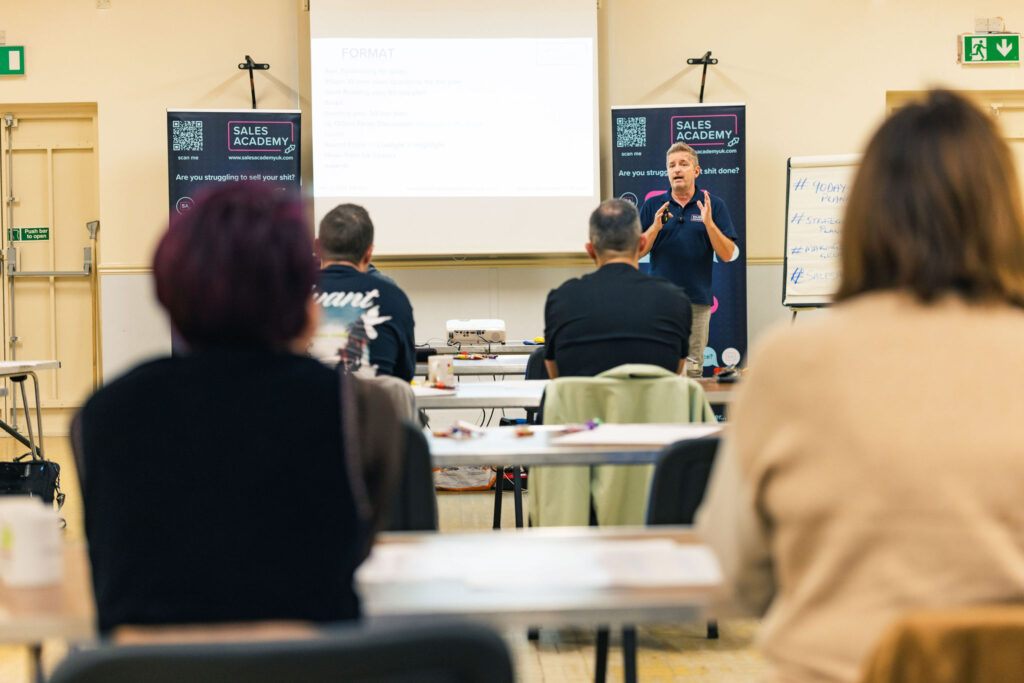
But as a professional development experience that respects the complexity of real conversations. That’s why in 2026 we’re opening something called The Sales Room®.
Not a seminar. Not a bootcamp.
A room. A small group environment where people can:
Slow sales down.
Understand the psychology of buying behaviour.
Explore the moments where confidence usually drops.
Practise conversations without pressure or performance.
Develop a sales process that actually fits them.
In other words, work on sales properly.
Who this is really for
This approach won’t appeal to everyone, and that’s fine. If someone is looking for quick scripts or clever closing tricks, they’ll probably find other options more appealing, but if someone takes their professional development seriously…If they care about how their conversations affect customers…If they want to improve the quality of the decisions happening on both sides of the table…Then this approach will resonate.
Because sales deserves to be treated with that level of thoughtfulness. It affects careers, it affects businesses, it affects customers. Handled well, it builds trust and long-term relationships, handled poorly, it damages them. We don’t believe that’s something to treat casually.
A challenge to anyone in business
Here’s a question worth asking. When was the last time you deliberately worked on your sales conversations?
Not your marketing, not your pricing, not your product, your conversations. The moments where someone is deciding whether to move forward with you. For many people the honest answer is “rarely”. Which is strange when you consider how much those conversations influence business outcomes.
Imagine if other professional skills were treated the same way. Imagine a surgeon saying, “I’ll just rely on instinct.” Or a pilot saying, “I think I’ve got the hang of it.” Professional skills require development. Sales should be no different.
Sales, properly
So this is our line in the sand. Sales deserves to be taken seriously. It deserves environments where people can develop their skills without pressure or performance. It deserves to move beyond scripts and hype. And the people who choose to develop their sales capability deserve better than what the industry often offers.
That’s what The Sales Room® represents. A commitment to treating sales as the professional discipline it actually is. Not louder, just better.
If that resonates with you, you’ll know. And if it doesn’t, that’s OK too. Either way, the flag is now in the ground.
Sales, properly.
Want to know more or book your places for you, your colleagues, your team, then click this link and remember ‘Action favours the bold!’ https://salesacademy.uk.com/the-sales-room/
#salestraining
#salesdevelopment
#businessowners
#leadershipdevelopment
#professionalskills
#salesacademy
#salesprofessionals
#personaldevelopment